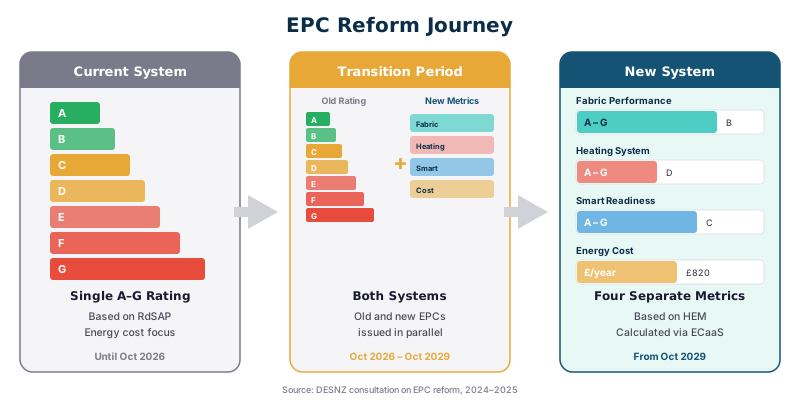
Energy Performance Certificates (EPCs) in the UK are being fundamentally reformed. The familiar single A–G rating will be replaced by four separate metrics (Fabric Performance, Heating System, Smart Readiness, and Energy Cost), giving homeowners, buyers, and landlords a much clearer picture of how a property actually performs. The new EPCs will be calculated using the Home Energy Model (HEM) instead of SAP and RdSAP, with a revised target launch date in the second half of 2027.
What Is Wrong with Current EPCs?
The current EPC system, introduced in 2007, has several widely acknowledged shortcomings:
- Single rating hides important detail: a property with excellent insulation but an old gas boiler gets the same overall score as one with poor insulation and a slightly newer boiler
- Based on energy cost, not efficiency: the A–G rating reflects fuel costs rather than actual energy performance, meaning cheap gas can mask poor fabric
- Outdated calculation: RdSAP uses monthly averages and cannot accurately model heat pumps, solar PV, or smart controls
- Inconsistent results: different software providers can produce different results for the same property
- Limited retrofit guidance: the current EPC recommendations are generic and often impractical
What Does the New EPC Look Like?
Under the new system, an EPC will display four separate metrics instead of a single rating. This allows homeowners and buyers to see exactly where a property excels and where it needs improvement:
| Metric | What It Tells You | Why It Matters |
|---|---|---|
| Fabric Performance (A–G) | How well the building's walls, roof, floor, and windows retain heat | Shows the quality of the building itself, independent of heating system |
| Heating System (A–G) | How efficient and low-carbon the heating system is | Under government proposals fossil fuel heating could not achieve C, driving the shift to heat pumps |
| Smart Readiness (A–G) | How well the home can interact with smart energy systems | Rewards battery storage, smart controls, and demand flexibility |
| Energy Cost (£) | Estimated annual energy running costs | Directly comparable between properties: what you'll actually pay |
For a detailed explanation of how each metric is calculated, see our New EPC Metrics Explained page.
How Will the New Assessment Work?
New-Build Homes
For new homes, the data collected for the HEM assessment used to demonstrate compliance with the Future Homes Standard can be reused for the EPC with minimal modification, so no fresh site survey is needed. The EPC itself is produced by a separate run through the EPC wrapper, which applies its own standardised assumptions.
Existing Homes
For existing homes, an energy assessor will visit the property and collect data using a modular input framework. This replaces RdSAP's rigid data collection model:
- Assessors record what they can directly observe: wall construction, window types, heating system, insulation where visible
- HEM supplies default values for elements that cannot be determined on site (for example, exact wall insulation thickness in a cavity wall)
- The same HEM engine runs the calculation via the ECaaS platform, ensuring consistency
- More detailed data (from building surveys or retrofit plans) can be fed in for a more accurate result
For more on the transition from RdSAP, see our RdSAP Transition page.
What This Means for Homeowners
If you own a home, here is what you need to know:
- Your existing EPC remains valid for 10 years from issue. You do not need to get a new one until you sell, let, or it expires
- The transition is gradual: from H2 2027 until at least the end of 2029, new EPCs will show both the old A–G rating and the new four metrics
- Fossil fuel heating will score poorly on the Heating System metric, which may influence property valuations over time
- Good fabric will be properly credited. If you have invested in insulation, this will show clearly in the Fabric Performance metric
- Smart technology is rewarded: battery storage, smart heating controls, and EV charging capability all contribute to the Smart Readiness score
What This Means for Landlords
Landlords should pay particular attention to the EPC reform. The Minimum Energy Efficiency Standards (MEES) currently require rental properties to achieve at least an E rating. In January 2026 the government confirmed that this will rise to EPC C for all tenancies from 1 October 2030, and set out how the standard will work with the new metrics:
- The standard is fabric-first: a property must meet the Fabric Performance standard, then either the Heating System or the Smart Readiness standard
- Under the proposed banding, properties with gas boilers could not achieve C on the Heating System metric, so compliance can be routed through Smart Readiness instead
- The separate Fabric Performance metric provides a clearer basis for assessing improvement requirements
Frequently Asked Questions
When do EPCs change to the new format?
New HEM-based EPCs are now targeted for launch in the second half of 2027, delayed from the original October 2026 target. The government announced this delay in March 2026. A legacy version of the existing A–G rating continues alongside the new metrics until at least the end of 2029. Existing EPCs remain valid for 10 years from issue.
Will the new EPCs affect property values?
The new metrics provide more detailed performance information, which may influence buyer and lender decisions. Properties with fossil fuel heating are expected to score poorly on the Heating System metric (under government proposals they could not achieve C or above), which could affect perceived value. However, properties with good fabric but old heating may benefit from the separate Fabric Performance metric, which was previously hidden in the single score.
Do I need to get a new EPC when the system changes?
No. Existing EPCs remain valid for 10 years. You only need a new one when selling or letting, or when your current EPC expires. During the transition (from H2 2027 until at least the end of 2029), new EPCs will show both the new four-metric framework and a legacy version of the Energy Efficiency Rating.
Why can't fossil fuel heating achieve a C rating?
The Heating System metric assesses both efficiency and carbon intensity. Fossil fuels produce significantly more carbon per unit of useful heat than heat pumps, even when the boiler is efficient. The government proposes to set the banding thresholds so that fossil fuel systems cannot achieve C or above, reflecting its net zero objectives.
What is the Smart Readiness metric?
Smart Readiness measures a home's capacity to interact with smart energy systems, including smart controls, battery storage, EV charging, and demand-side response. A home with a heat pump, battery, and smart controls scores highly. This metric encourages homes to be “grid-ready”, able to shift demand in response to grid signals and benefit from time-of-use tariffs.
Related Pages
EPC Changes for Homeowners
What the new EPC system means for property values, selling, renting, and improvements.
New EPC Metrics Explained
Full breakdown of the four new headline metrics.
RdSAP to HEM Transition
How RdSAP is being replaced for existing dwelling assessments.
What is the Home Energy Model?
Comprehensive introduction to HEM.